Boost Local Business with SEO Strategies
Local Marketing, SEO, Small Business Growth
How Local Service Businesses Can Turn Online Searches Into Customers
When someone nearby searches for “plumber near me” or “best dentist in [your town],” you have only a few seconds to win their attention and earn their trust. Turning that quick online search into a real conversation—and then a paying customer—depends on how visible you are in search results and how easy you make the next step.
Why Showing Up in Local Search Results Matters So Much
For most local service businesses, Google has replaced the phone book and word-of-mouth often starts online. If you are not visible when people search for the services you offer, you are simply not in the running. Being present in local search results—organic listings, map packs, and business profiles—puts you in front of people at the exact moment they are ready to hire someone.
Visibility alone is not enough, but it is the foundation. Strong local SEO ensures search engines understand who you are, what you do, and where you work, so they can match you with nearby searchers who need your help right now.
Start With Local Relevance: Services, Locations, and Common Questions
Local relevance tells both search engines and people, “You are in the right place.” That starts with clear, focused service pages. Instead of one generic “Services” page, create individual pages for each core service—“Emergency Plumbing,” “Teeth Whitening,” “AC Installation,” “Roof Repair”—and describe what is included, who it is for, and typical timelines or pricing ranges.
Next, weave in geographic information. Mention the cities, neighborhoods, and regions you serve in your headings, body copy, and meta-descriptions. A “Plumbing Services in Oakwood and Westfield” page, for example, sends a clear signal about your service area and reassures local visitors that you actually come to them.
Finally, publish content that answers common questions: “Do you offer same‑day service?”, “What areas do you cover?”, “Do you provide free estimates?”, “What should I do before you arrive?” This kind of helpful, plain-language content builds trust, reduces hesitation, and increases the chances that visitors will take the next step instead of clicking away.
Make the Next Step Clear and Convenient
Once someone lands on your website, they should never have to wonder, “What do I do now?” Every page—especially your home page and service pages—should have a clear, obvious next step. That might be “Call Now,” “Request a Quote,” “Schedule an Appointment,” or “Check Our Service Area.”
Use simple buttons and short forms. Repeat your primary call to action several times as visitors scroll. The easier and more obvious it is to contact you, the more of your search traffic will turn into real leads and conversations.
Design for Mobile First: Make Your Website Effortless on a Phone
Most local searches happen on mobile devices. That means your website has to work beautifully on a small screen. Text should be easy to read without zooming, buttons should be large enough to tap, and pages should load quickly even on a slower connection. A clumsy mobile experience is often the difference between a new booking and a lost opportunity.
Think about what a mobile visitor needs in the first 10 seconds:
To identify your services quickly—“Yes, they do what I need.”
To confirm your service area—“Yes, they come to my neighborhood.”
To see an easy way to call, request a quote, or schedule.
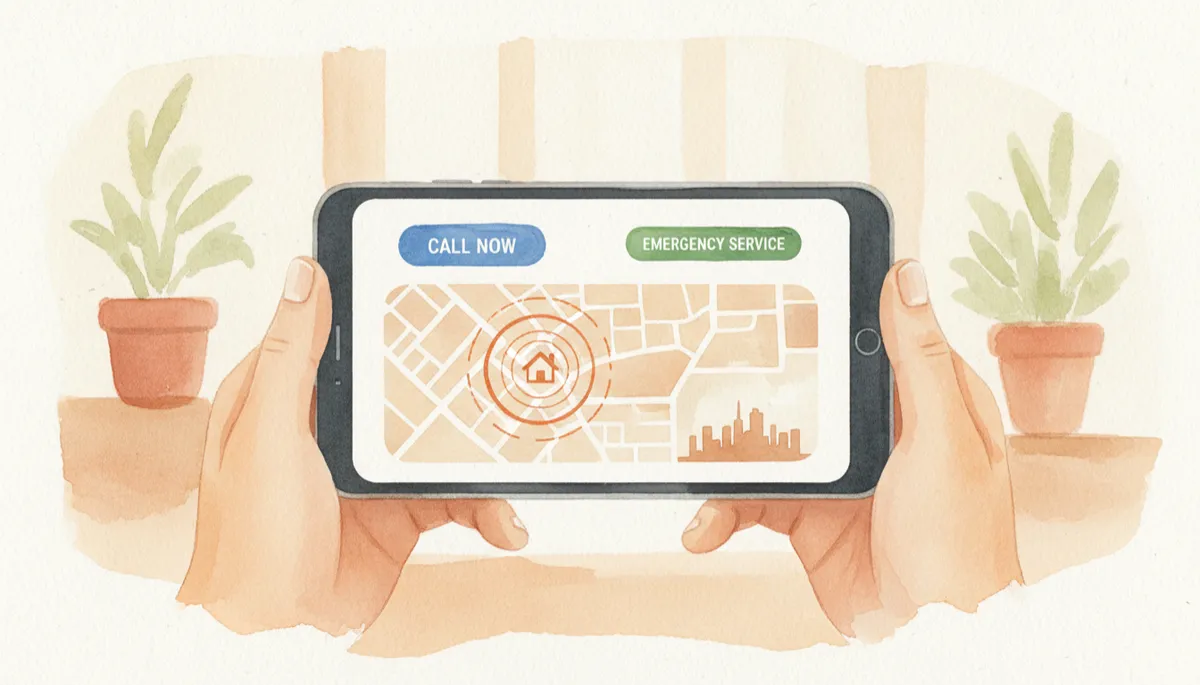
A smooth mobile experience turns quick local searches into immediate inquiries.
Key Features That Turn Visitors Into Leads
To truly capitalize on your search visibility, build in features that make it effortless to take action:
A clear list of services with brief descriptions, so visitors can instantly see if you are a fit.
A simple way to confirm service areas, such as a map, ZIP code checker, or list of neighborhoods.
Prominent click‑to‑call buttons that dial your number with one tap on mobile.
Short, focused quote request forms that ask only for the essentials: name, contact details, service needed, and preferred time.
Online scheduling tools that let customers pick a time slot or request a visit without calling.
Respond Fast: CRM Integration and Automated Messaging
When someone fills out a form or sends a message, they are often reaching out to several businesses at once. The one that responds first usually has the best chance of winning the job. That is where CRM integration and automated messaging become powerful.
By connecting your website forms and call tracking to a CRM, every new inquiry is captured automatically, assigned to the right person, and never forgotten. Automated text or email replies can confirm you received the request, share basic information, and let the customer know when to expect a follow‑up. This combination of speed and organization shows professionalism and keeps you from losing leads simply because no one replied in time.
Build Trust With Reviews and a Strong Local Reputation
After finding you in search and seeing that you serve their area, most people look at reviews before they decide to contact you. A steady stream of recent, positive reviews on Google, Yelp, and other platforms acts as social proof that you do good work and stand behind your services.
Make it part of your process to ask happy customers for feedback and guide them to your preferred review sites. Use your CRM or follow‑up tools to send polite review requests after a job is completed. Then, showcase those reviews on your website and in your Google Business Profile. A strong online reputation not only improves your local rankings but also makes visitors far more comfortable taking that next step.
Connect the Dots: From Local SEO to Lasting Customer Relationships
Turning local searches into customers is not about any single tactic. It is about connecting local SEO (so people find you), lead capture (so they can reach you easily), CRM and follow‑up (so you respond quickly and stay organized), and reputation management (so future searchers see proof of your quality).
When these pieces work together, a typical journey looks like this: someone searches locally, finds your optimized listing, visits your mobile‑friendly site, clearly sees that you serve their area, taps to call or requests a quote, receives a fast response, has a great experience, and then leaves a review that attracts the next customer. In other words, local searches become conversations—and conversations become loyal customers.